Average read time: mins.
How to Start Pilates at Home: A Beginner's Guide
If you've been curious about Pilates but the studio feels intimidating or expensive, the good news is that you can absolutely start at home with almost nothing. Pilates is a low-impact method focused on core strength, controlled movement and breathing, and it's one of the friendliest places for a complete beginner to begin. This guide covers what you actually need, how to take your first steps safely, a short routine to try, and what realistic progress looks like.
What Pilates Actually Is (and Why It Suits Home Practice)
Pilates is a system of controlled, low-impact exercises built around your core — the muscles of your abdomen, back, hips and pelvic floor. Rather than fast reps or heavy weights, it prizes quality of movement: slow, precise actions coordinated with your breath. That focus on control rather than intensity is exactly why it travels so well to a living-room floor.
Most beginners practise mat Pilates, which uses your own bodyweight and a mat — no reformer machine required. It's accessible, gentle on the joints, and may help you build strength, mobility and body awareness over time. It's a complement to, not a replacement for, professional guidance if you have specific health needs.
What You Need to Get Started
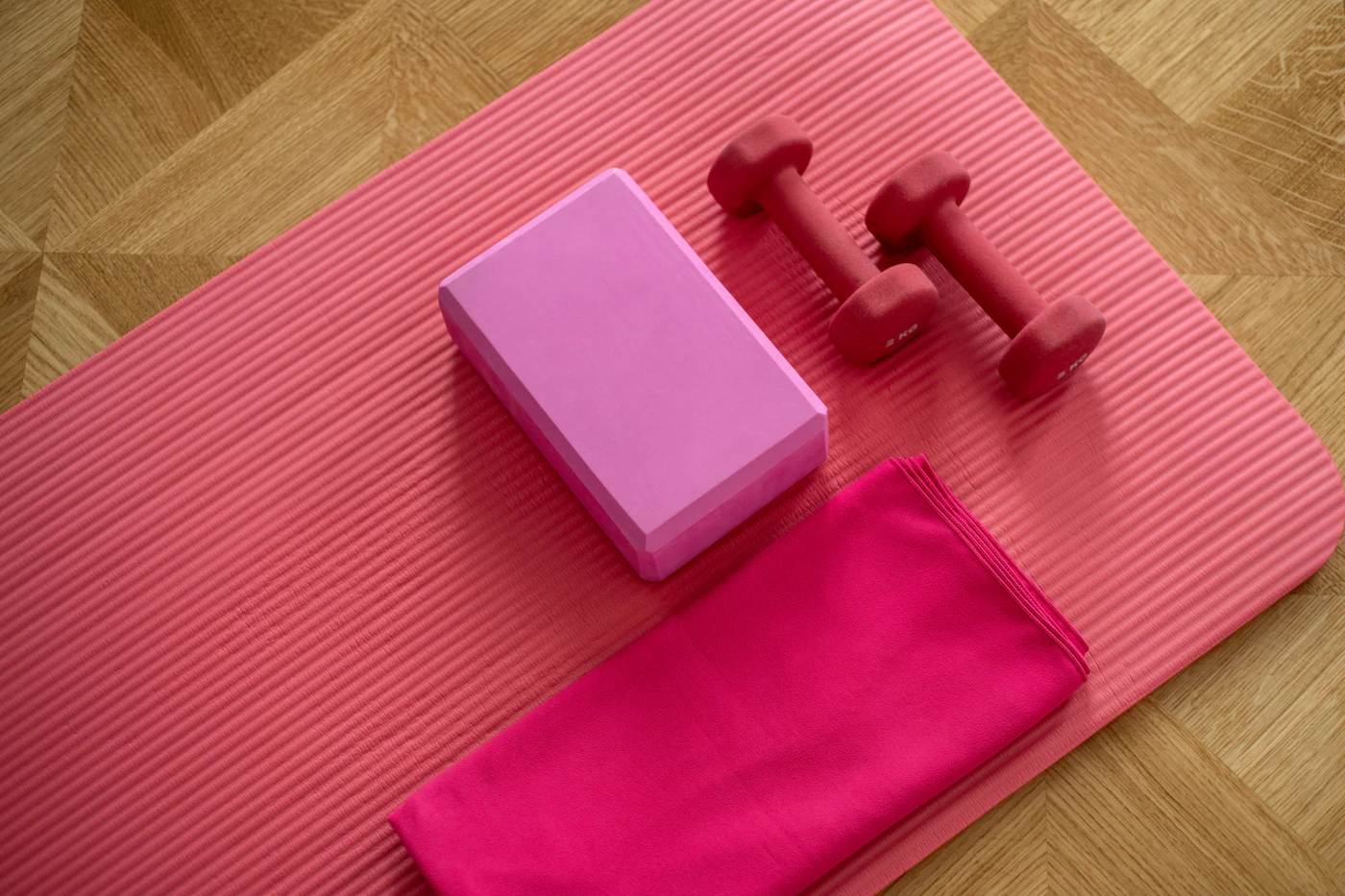
One of the joys of Pilates is how little kit it demands. You can begin today with what you already own, and add small, inexpensive props only once you know you'll stick with it.
Here's a realistic starter checklist:
- A non-slip exercise mat (a thicker one is kinder on your spine than a thin yoga mat)
- A clear, flat space roughly the length of your body plus a little room to stretch out
- Comfortable, stretchy clothing you can move and bend in freely
- Bare feet or grippy socks — Pilates is usually done without shoes
- A beginner-friendly video, app or qualified online instructor to follow
- Optional extras for later: a small cushion, a resistance band or a soft Pilates ball
Your First Steps: Posture, Breath and Core
Before any moves, learn three foundations. First, neutral spine: lying on your back, knees bent, let your lower back keep its natural gentle curve rather than flattening or arching it. Second, lateral breathing: breathe wide into your ribcage, exhaling fully — Pilates often pairs the effort of a movement with the out-breath. Third, gently engaging your core: imagine drawing your lower abdomen lightly inward and up, as if zipping up snug jeans, without holding your breath or gripping.
Spend your first session or two simply rehearsing these. They feel underwhelming, but they're the difference between Pilates that builds real strength and movements that just go through the motions. Always start with a few minutes of easy movement to warm up, and stop if anything feels sharp or pinching.
A Simple 15-Minute Beginner Routine
Once the basics feel familiar, try this short sequence. Move slowly, keep breathing, and aim for control over speed or repetitions. Two or three rounds, two to three times a week, is plenty to start.
- Warm-up: lie on your back and do 6–8 slow pelvic tilts, rocking your pelvis gently to find neutral spine
- Knee folds: keeping your core engaged, slowly lift one foot then the other to tabletop, 6 each side
- Glute bridges: peel your spine off the mat one vertebra at a time, hold briefly, lower slowly — 8 reps
- Modified hundred: in tabletop, pump your arms gently by your sides while breathing in for five counts, out for five — build to 5 rounds
- Cat-cow: on hands and knees, alternate arching and rounding your spine with your breath, 6 times
- Child's pose and a gentle full-body stretch to cool down for a minute or two
What to Expect and How to Progress
Early on you may feel muscles you didn't know you had, particularly deep in your abdomen — a little tenderness the next day is normal, but genuine pain is not. Progress in Pilates is quieter than in some workouts: you'll likely notice better posture, a steadier core and easier everyday movement before you see anything dramatic. Consistency beats intensity every time.
To advance, add reps gradually, slow your tempo, reduce how much you rest, or progress to slightly harder variations once the basics feel controlled. Building a calm, repeatable ritual helps — some people like to dim the lights and put on gentle ambient sound and scenery to settle into the session and focus on their breathing.
Staying Safe and Comfortable
Pilates is gentle, but smart habits keep it that way. Always warm up, move within a pain-free range, and prioritise good form over doing more. Breathe throughout — holding your breath is a common beginner slip. If a movement strains your neck or lower back, ease off or choose a simpler version; there's no prize for pushing through discomfort.
If you're pregnant or recently postnatal, recovering from injury or surgery, or managing a medical condition, speak to a doctor or a qualified Pilates instructor or physiotherapist before starting, and stop and seek advice if you feel pain. A few sessions with a professional, even online, can also fast-track your technique and confidence.
Starting Pilates at home asks for very little — a mat, a small space and a willingness to move slowly and pay attention. Begin with the foundations, keep your sessions short and regular, and let progress build quietly over the weeks.
Be patient and kind with yourself: the goal isn't perfection but a stronger, steadier, more comfortable body. Listen to it, enjoy the calm, and let the practice grow with you.