Average read time: mins.
Forest Bathing and the Roots of Shinrin-Yoku
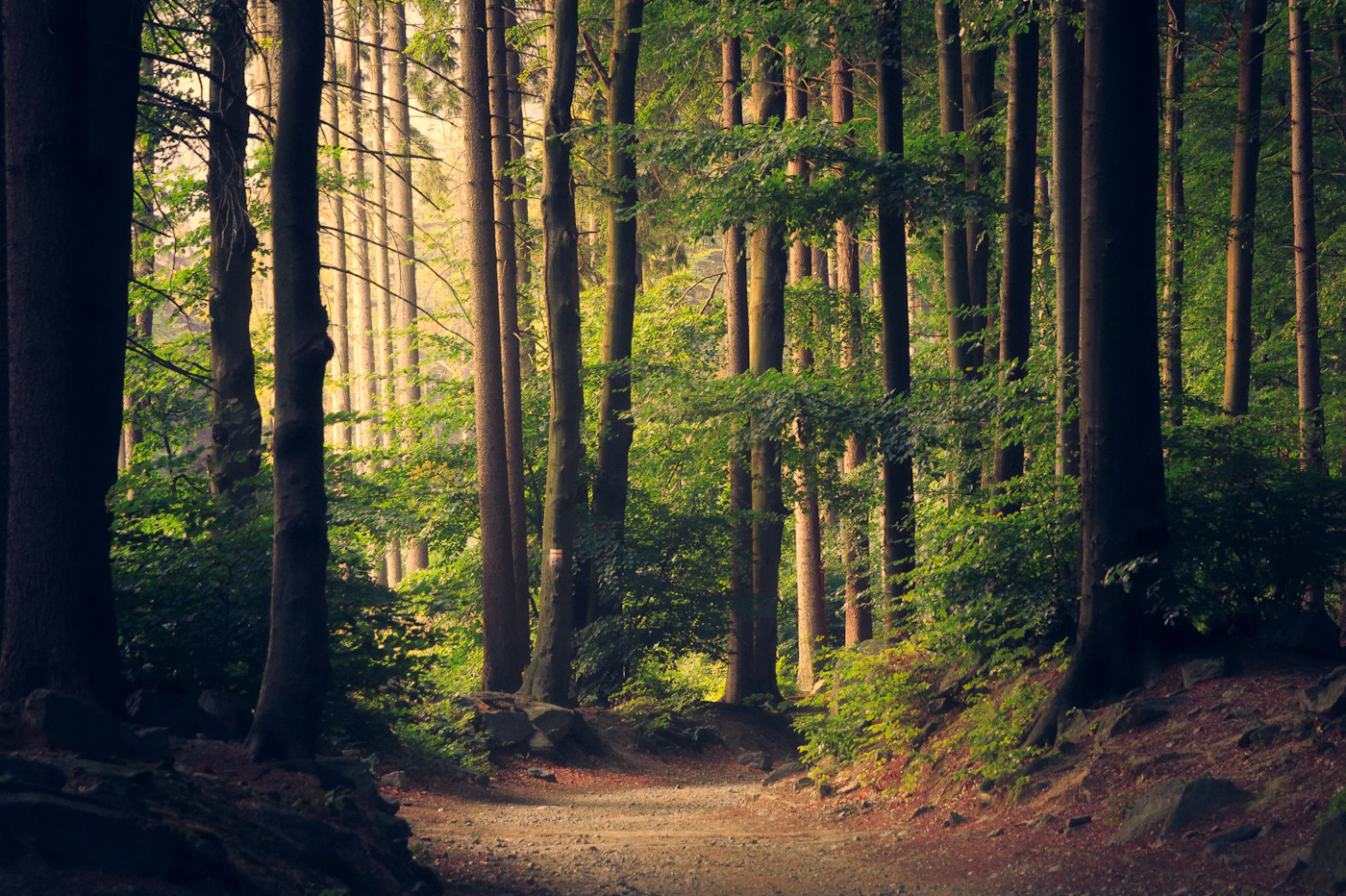
There is a particular quiet that settles over you when you step beneath a canopy of trees — the light goes soft and green, your shoulders drop, and the noise in your head loosens its grip. The Japanese have a word for giving yourself over to this feeling on purpose: shinrin-yoku, or "forest bathing." It isn't a hike or a workout. It's simply being among trees, slowly, with your senses open. Here is where the idea came from, and why so many people have come to treat woodland as a genuine form of rest.
A word coined in the 1980s
The term shinrin-yoku is younger than most people assume. It was introduced in 1982 by Japan's then Forestry Agency, partly as a public-health idea and partly as a way to encourage people to value the country's vast forests. Japan is mountainous and heavily wooded, yet by the early 1980s its population had become intensely urban, its working culture famously demanding. The phrase offered something gentle and almost permissive: that walking quietly among trees was not idleness but a legitimate way to look after yourself.
The translation — "forest bathing" — is worth sitting with. You are not washing in water but immersing yourself in the atmosphere of the forest: its light, its scent, its sound, its stillness. The metaphor frames the woodland as something you soak in rather than something you conquer.
Older roots than the name suggests
While the word is modern, the instinct behind it runs far deeper. Both Shinto and Buddhist traditions in Japan hold forests and ancient trees as sacred, places where the everyday world thins out and something quieter takes over. Shrine groves were left deliberately wild, and pilgrimage routes wound through the mountains for centuries. To walk slowly and reverently among old trees was already a familiar act long before anyone gave it a clinical name.
So shinrin-yoku didn't invent the experience — it named and formalised a relationship with the forest that was already woven through the culture. The 1980s simply translated an old reverence into language a busy, modern population could act on.
Why being among trees became a recognised rest
Over the following decades, researchers in Japan and elsewhere began studying what actually happens when people spend unhurried time in woodland. The findings, broadly, line up with what walkers have long reported: time in nature may help lower the sense of stress, ease a racing mind, and lift mood. Some studies point to slower breathing and a calmer nervous system after even short woodland visits.
Part of the explanation may simply be contrast. Cities ask a great deal of our attention — traffic, screens, notifications, decisions. A forest asks almost nothing. The eye can rest on soft, irregular shapes; the ear meets sound that is steady rather than sharp. This gentle, undemanding input is sometimes described as letting attention recover, the way a tired muscle recovers when you stop using it.
It's the senses, not the step count
The heart of forest bathing is that it is sensory, not athletic. The point is not distance covered but attention paid. Practitioners often slow right down, sometimes covering only a few hundred metres in an hour, pausing to notice rather than to progress.
If you'd like to try it, the approach is forgiving and needs no special skill:
Mountains and grand forests are wonderful, but they aren't required — a city park, a line of street trees, or a single old oak can carry a surprising amount of this same quiet.
Bringing the forest indoors
Of course, most of us can't reach real woodland whenever the day turns frayed. The encouraging part is that the senses are surprisingly generous: a convincing soundscape and a calm green view can carry a good deal of the same settling effect, especially when you give them your full, unhurried attention.
Layered birdsong, a far-off stream, leaves moving in a breeze — paired with slow forest imagery — won't replace the real thing, but many people find it a genuine way to borrow the woodland's stillness on an ordinary Tuesday. Treat it as you would a real forest walk: dim the lights, slow your breathing, and let it wash over you rather than playing in the background.
You don't need a mountain, a free afternoon, or any expertise to begin — only a willingness to slow down and let the trees do the rest. Whether that's a real grove near your home or a forest scene and soundscape you build for yourself on a quiet evening, the invitation is the same: step in, breathe out, and stay a while.
However you find your way among the trees, let it be unhurried. The forest has been offering this kind of rest for a very long time, and it asks for nothing in return.