Average read time: mins.
A Sense of Altitude: Why Mountains Reset the Mind
There's a particular kind of quiet that arrives when the land falls away beneath you. Stand on a high ridge, or even just look up at a distant range, and something in the mind seems to loosen. Mountains have drawn walkers, wanderers and weary thinkers for centuries — not because they're easy, but because they offer something the valley floor rarely does: perspective. This is a look at why high places and big horizons can quietly reset a tired mind, and how to borrow a little of that lift without leaving your chair.
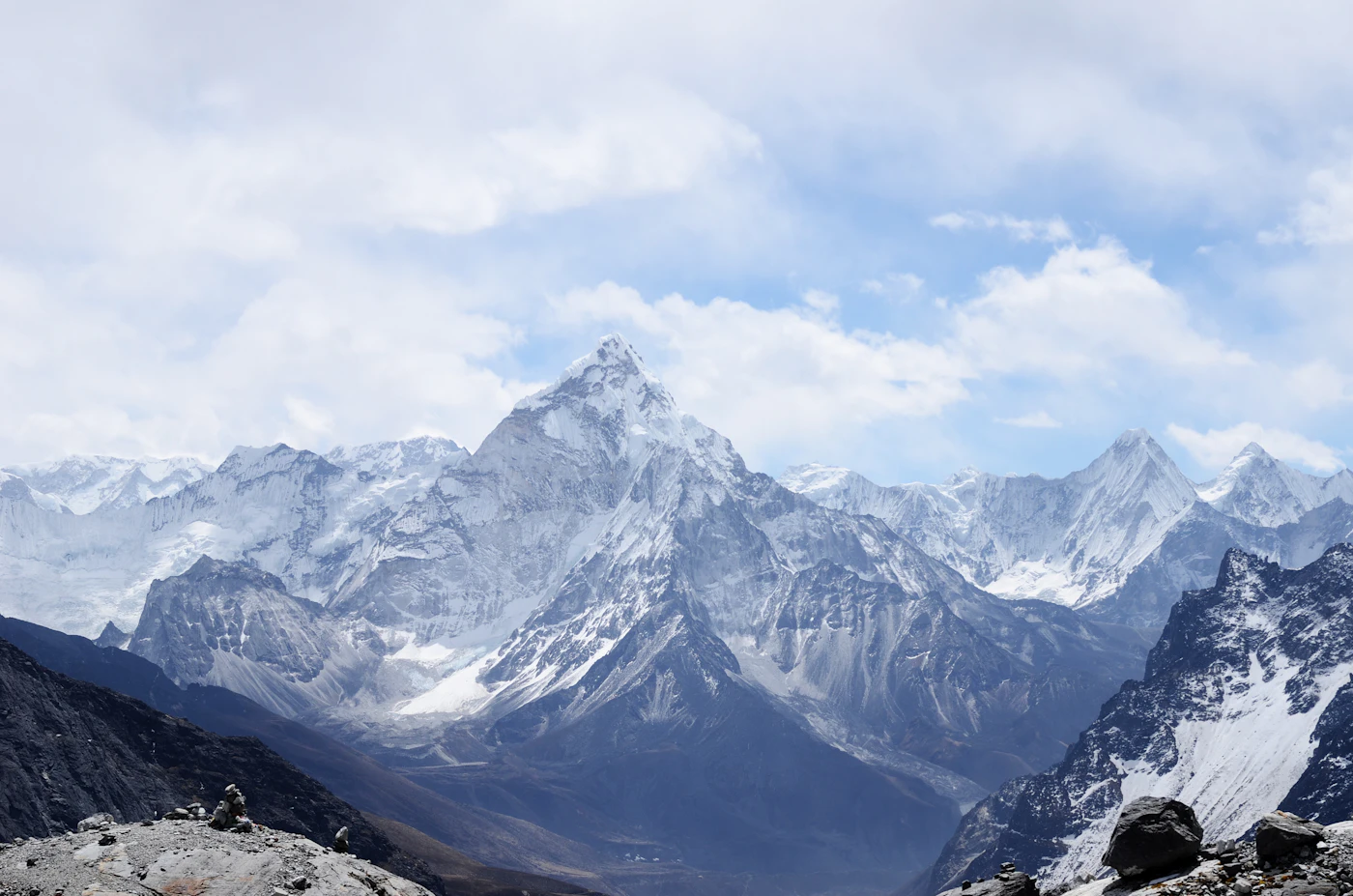
The pull of the high place
Mountains ask something of us, and that's part of their appeal. They're not background scenery in the way a meadow might be — they stand up, insist, draw the eye upward. Across cultures and centuries, people have climbed to high ground to think, to grieve, to pray or simply to breathe. The instinct seems older than any of our reasons for it.
Part of what we feel up high is a gentle sense of awe — that mix of smallness and wonder that comes from standing before something vast. Research suggests awe can quieten the chatter of self-focused worry and leave people feeling calmer and more generous afterwards. You don't need a summit for it. Sometimes a long view across folded hills is enough to tip the mind into that wider, stiller register.
Why distance soothes a busy mind
Most of modern life is lived close-up. Screens sit a forearm's length away, walls are near, and our attention narrows to the next small task. Mountains hand us the opposite: a horizon that may be miles off, layered ridges fading from green to grey to the palest blue. The eye, so used to focusing tight, finally gets to rest on the far distance.
There's a theory in psychology — often called attention restoration — that natural scenes hold our gaze softly rather than demanding it, giving the mind's effortful, directed attention a chance to recover. Big open landscapes seem especially good at this. Many people find that a long view loosens the grip of a problem they've been chewing over, not by solving it, but by making it feel a little smaller and more manageable.
The reset of changing scale
When everything you can see is enormous and ancient, your own day shrinks to a more honest size. The unanswered email, the awkward conversation, the running list — none of it disappears, but it stops looming. Mountains have stood through far worse than a difficult Tuesday, and being near them, even in imagination, lends a borrowed steadiness.
This isn't about belittling what you carry. It's that a shift in scale can be genuinely restful. Stepping back to see the whole range, rather than every loose stone underfoot, is as much a mental move as a physical one.
Bringing the mountains indoors
You don't need boots and a long drive to draw on some of this. A surprising amount of the restorative effect seems to come through the eyes and ears — the sweep of a ridgeline, the hush of high air, the sense of space. You can recreate a fair share of it at a desk or in bed, especially when you pair what you see with what you hear.
A few small ways to invite that high, open feeling into an ordinary day:
- Choose a view with depth — layered ridges or a distant range — so your eyes have somewhere far to settle.
- Add soft mountain sound: high wind, a thread of distant birdsong, or the faint trickle of meltwater.
- Let it run quietly in the background while you work, rather than watching it head-on.
- Give it a few unhurried minutes; the sense of space tends to arrive slowly, not on demand.
A high place for sleep and focus
The same qualities that make mountains restful by day can help wind the mind down at night. A slow slideshow of dusk settling over a range, paired with low, steady wind, gives the senses something calm and unchanging to follow as you drift off. There are no sudden events to track, no narrative to follow — just slow, patient stillness.
For focus, the trick is gentler. A big, quiet horizon and unobtrusive natural sound can hold the edges of your attention steady so the centre is free to work. Many people find that a calm, spacious backdrop helps them stay with a task longer than silence or a busy room ever could.
You don't have to climb anything to feel a little of what the heights offer. The lift of a wide horizon, the hush of high air, the quiet reminder that most things are smaller than they feel at midnight — these are available wherever you happen to be sitting.
Next time the day presses in close, try building yourself a high place: a slow mountain view, a thread of wind, perhaps a line or two of something steadying. On Create Your Zen you can layer that scenery and sound into a mix that's entirely your own — and let the altitude do its quiet work.